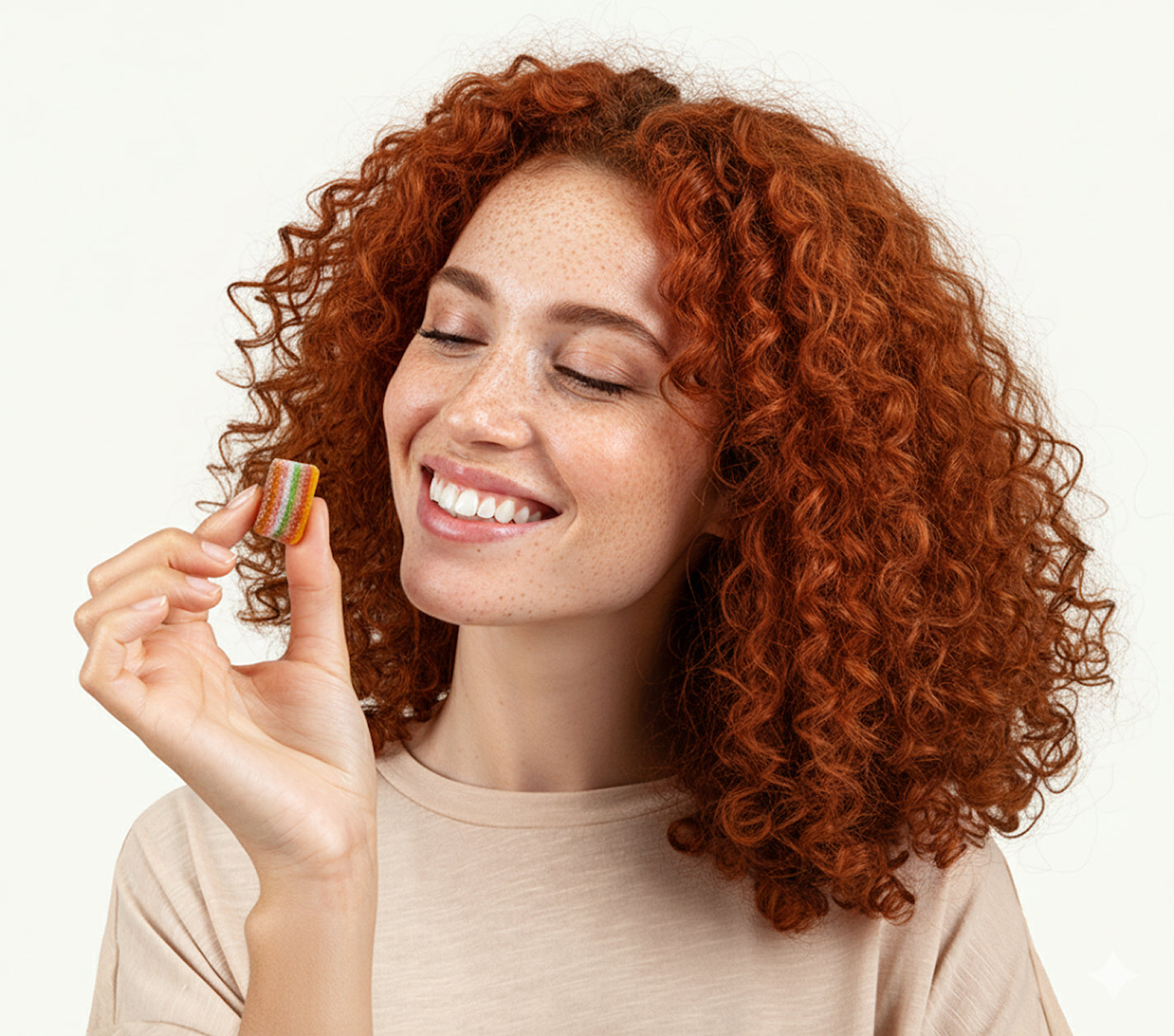

Physician-formulated, targeted sperm-health nutrition built around the 74–90 day sperm cycle.
Fertility conversations tend to center on women. But male factors are involved in roughly half of all infertility cases, and infertility itself affects about 1 in 6 couples worldwide. Several of the most common nutrition-responsive contributors to sperm quality — including oxidative stress and aspects of motility and morphology — are among the areas where targeted nutrients have been most extensively studied.
Timing is a big part of why: sperm takes 74 to 90 days to develop. The sperm available today reflect a process that began eight to twelve weeks ago, which is why support needs to start early and stay consistent rather than begin the week before trying.
Three nutrients this formula is built around
An amino acid that helps sperm cells generate the energy they need to move — motility, one of the main measures on a semen analysis. L-carnitine is one of the most-studied nutrients in male fertility research, and 900 mg is a clinically meaningful amount.
CoQ10 (coenzyme Q10) is an antioxidant that supports cellular energy production. In men with certain sperm-quality challenges, supplementation has been associated with improvements in motility and antioxidant status.
The antioxidant behind tomatoes' red color, studied for its associations with sperm concentration, motility, and morphology, and for reducing oxidative damage to sperm DNA.
Sperm cells are unusually vulnerable to oxidative damage, which is the reasoning behind an antioxidant-forward formula: CoQ10, lycopene, and vitamin E work together to support the body's defenses during the window when new sperm are formed.
The rest of the formula
Supports DNA synthesis and repair; men with higher folate status tend to show better measures of sperm quality.
A fat-soluble antioxidant that helps protect sperm cell membranes from oxidative damage, often studied alongside CoQ10 and selenium.
Sperm takes eight to twelve weeks to develop, so staying consistent across that whole stretch is what makes the real difference — and a complicated multi-pill regimen is one of the most common reasons people don't. A single daily dose, sweetened without added sugar, removes that barrier.
- Third-party tested
- GMP-certified
- Vegan
- No added sugar
- FSA/HSA eligible
This formula supports sperm-health nutrition. It is not a treatment for male infertility and cannot promise conception. If you and your partner are navigating fertility challenges, treat this as a complement to — not a replacement for — evaluation and care from your medical team. Because sperm takes 74–90 days to form, allow enough time for nutritional changes to support sperm development.

References
- World Health Organization. 1 in 6 people globally affected by infertility. 2023.
- Male Infertility. StatPearls [Internet]. NCBI Bookshelf. 2024.
- Fertility and infertility: Definition and epidemiology. Clin Biochem. 2018.
- A stable isotope-mass spectrometric method for measuring human spermatogenesis kinetics in vivo. J Urol. 2006.
- The Effect of Nutrients and Dietary Supplements on Sperm Quality Parameters: A Systematic Review and Meta-Analysis of RCTs. Adv Nutr. 2018.
- The Role of Dietary Nutrients in Male Infertility: A Review. Life (Basel). 2023.
- Impact of Coenzyme Q10 and Selenium on Seminal Fluid Parameters and Antioxidant Status in Men with Idiopathic Infertility. Biol Trace Elem Res. 2021.
- Coenzyme Q10 improves sperm motility and antioxidant status in infertile men with idiopathic oligoasthenospermia. Clin Exp Reprod Med. 2022.
- Lycopene and male infertility. Asian J Androl. 2014.
- L-Carnitine and Male Fertility: Is Supplementation Beneficial? J Clin Med. 2023.
These statements have not been evaluated by the Food and Drug Administration. This product is not intended to diagnose, treat, cure, or prevent any disease. Physician-formulated for nutritional support.